
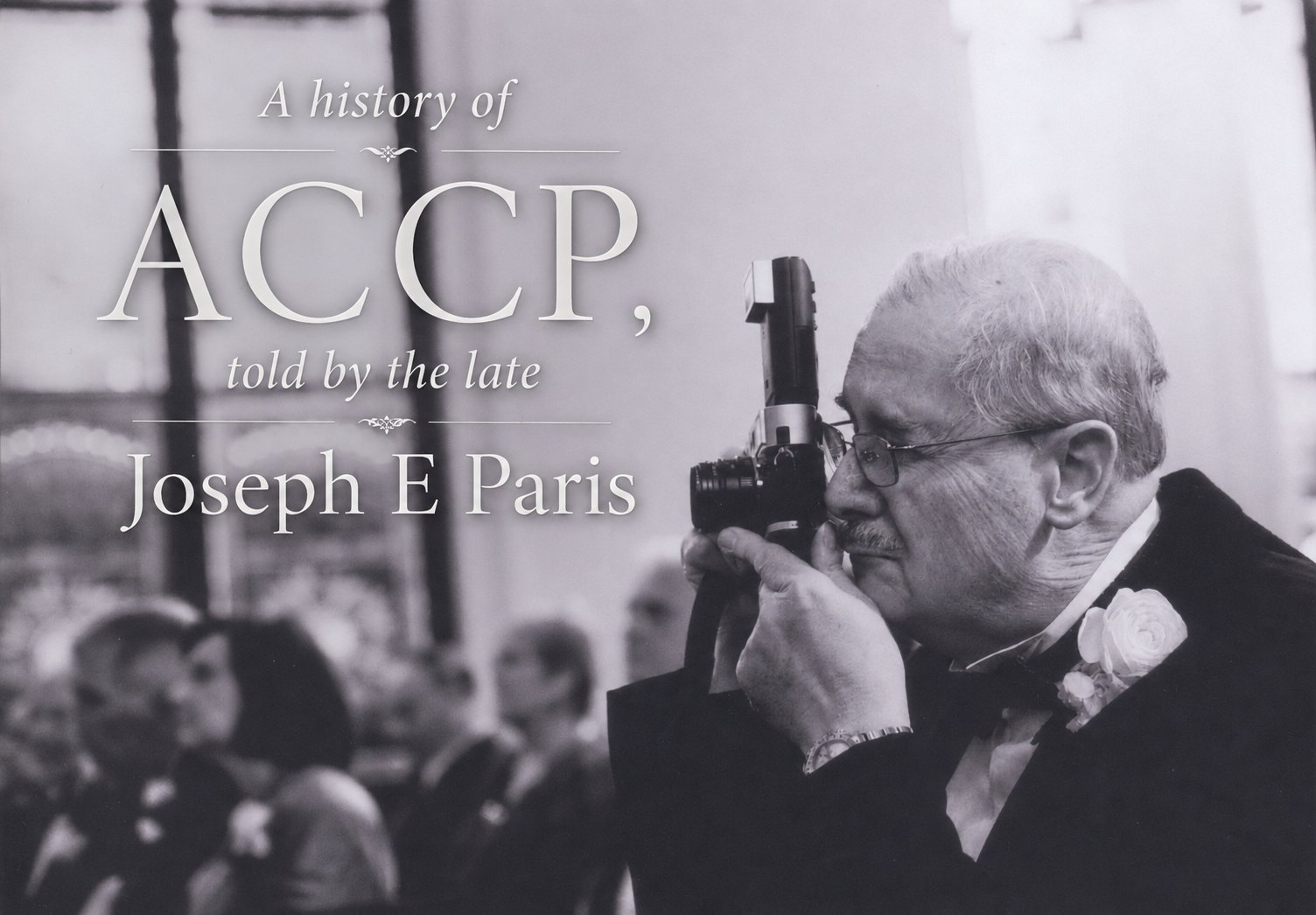
As one of the old-timers, I am frequently asked by newer members what it was like when we began. With the SCP now counting fourteen years of growth, this is a good time to tell the story for the younger generation — the story of a dream that belonged to Armond Start, a visionary correctional physician who passed away unexpectedly in 2000.
Under the National Center for Correctional Health Care Studies, Armond Start mails a memorandum to 1,700 correctional physicians on the NCCHC’s MD list.
About thirty correctional doctors gather at the NCCHC annual meeting in Chicago, each willing to pay $35.00 in dues.
At a national meeting in Atlanta, the SCP counts 81 dues-paying members; about half attend.
A mail-in ballot ratifies the bylaws and constitution. Ron Shansky is elected the first president.
In Orlando, the SCP holds both an educational program and a business meeting — the formula still used today.
The first issue of the Desmoteric News is distributed, carrying a President’s message from Ron Shansky.
NCCHC begins managing the Society; a young Paula Hancock is named Executive Director, a role she plays with distinction.
Created at the Fourth Annual Meeting in San Antonio — the highest honor a correctional physician may receive.
Armond Start, the Society’s visionary, passes away unexpectedly.
With Volume 6, Issue 2, the newsletter takes the name it still carries: CorrDocs.
At the Annual Educational Conference in Dallas, the Society of Correctional Physicians is reborn as the American College of Correctional Physicians.
Armond envisioned an organization for the representation of, and as a forum for, correctional physicians. He began working as its secretary, and enlisted the support of Ron Shansky, the former Illinois DOC Medical Director and a longtime consultant in correctional health care. Under the banner of the National Center for Correctional Health Care Studies, an organization Armond created, a memorandum was mailed in August of 1992 to 1,700 correctional physicians in the NCCHC’s MD mailing list. The memo announced an organizational meeting for those interested, to be held during the annual NCCHC meeting in Chicago on September 25, 1992. At the meeting, Armond and Ron met with about thirty correctional doctors willing to participate and pay $35.00 in dues.
I was present at that meeting, but I do not recall all the other participants. I know that Armond Start, Ron Shansky, Steve Spencer, Joe Goldenson, Arthur Raines, Donald Potts and I were there. I apologize for not remembering all the charter members. With only a few members, incipient bylaws, no business site, and very little cash, the startup was rough. To get us going, Armond chipped in $1,000.00 of his own money. I think we eventually returned the seed money to him, but I am not sure.
By March 12, 1993, at another national meeting in Atlanta, Georgia, the SCP had 81 dues-paying members. About half of these attended. A mail-in ballot was circulated on April 1, 1993 for the approval of the bylaws and constitution Armond had drafted and the election of the first slate of officers. Ron Shansky was elected first president. Arthur Raines was secretary, Armond Start was treasurer, and there was an editorial board consisting of Joe Goldenson, James Hipkens, and Donald Potts. By the next meeting, September 20, 1993, in Orlando, Florida, the SCP was well underway and offered both an educational program and a business meeting. During the formative years, some of the biggest challenges were instituting processes and government structures such as committees able to propel the Society forward. So much depended, and still depends, on the President and the Board. Where there was strong leadership, the Society made great leaps forward. At other times, it just maintained the status quo. This is why committees and member involvement are so important.
Driven by enthusiastic leaders, the original nucleus grew steadily, refined its bylaws, and evolved into the Society as we know it. The SCP developed a formula still in use today: a quarterly newsletter, one or more annual meetings with lectures and presentations tailored to correctional physicians, and a constructive relationship to other correctional organizations. This particular area required some delicate diplomacy. Other correctional societies comprise a broad spread of professionals including doctors. It is no secret that some would have preferred to see correctional physicians develop their group from within a broader, preexisting organization. To Armond Start’s and Ron’s credit, the model chosen has preserved absolute independence for the SCP members while being able to harmoniously interact with other correctional organizations. To date, SCP national meetings have always been conducted in conjunction with national meetings of the National Commission on Correctional Health Care, the American Correctional Health Services Association, or the Correctional Medical Institute.
Initially, the SCP was managed by a Chicago-based management company called Westerbeck. NCCHC began managing the SCP in 1997. A very young Paula Hancock, who had only been at the Commission a year and a half, was given the role of Executive Director of the Society — a role that she played with distinction. When Westerbeck turned over management to NCCHC, all it supplied was a disk with the names and addresses of approximately 400 physicians (only 73 of these were dues-paying members) and one copy of each back issue of Desmoteric News. Everything else had to be created from scratch. Ever since the NCCHC management era began, the SCP benefited from having its own staff, thus being able to provide consistent contacts and communications with its members, the public, and other agencies and supporters.
The SCP newsletter has had three names. A preliminary issue was edited by member Reginald Jenkins in March of 1993 and was called Desmoteriatric Medicine. It carried an article describing Armond Start’s impassioned presentation at the AMA House of Delegates speaking against MD participation in executions in 1992. The rather awkward newsletter name was suggested by Armond, who used desmo as meaning ligament or chain.
A physician caring for patients in chains practices desmoteriatric medicine.— Armond Start
Later on, desmoteriatric was shortened to desmoteric, another Armond word. The first issue of the Desmoteric News was distributed in the summer of 1994. It carried a President’s message by Ron Shansky and a couple of articles of interest to correctional doctors. Ron’s message included his pleasure in noting that there were 175 members (this number may have been optimistic). He emphasized the correctional physician’s professional responsibility in ensuring delivery of quality health care to inmates. He noted that well-run correctional health care services were distinguished by a clearly delineated health care authority and, preferably, a physician in charge.
With member support, SCP promises to develop a strong voice in order that our opinions will be heard and our positions will be respected.— Ron Shansky, first President
The second issue carried articles by Ron Shansky, Fred King, Terrence Flannery, Dianne Rechtine, and Armond Start. The newsletter name changed again to the more euphonic CorrDocs in the spring of 2002, with Volume 6, Issue 2. Three to four issues a year have been published since the beginning, edited in succession by Joseph Paris, Dean Rieger, Michael Puisis, and Lynn Sander. In 2005 an SCP website evolved, and was refined in 2006 and redesigned in 2012.
The Society of Correctional Physicians has now become the American College of Correctional Physicians — an identity that better reflects our mission of promoting professional excellence and our vision to pursue and establish the highest ideals and ethical standards in the provision of health services to those who are incarcerated, and to advance research, education, and training in correctional medicine by academia and government.
By adopting this new identity, we envision that the ACCP will be perceived as the strong physician organization that supports and provides leadership to our colleagues struggling with the internal and external challenges facing correctional medicine. The ACCP will continue to advocate for our patients and become a nationally recognized voice to speak to non-correctional professional physician organizations.
From thirty doctors in a Chicago meeting room to a nationally recognized voice for correctional medicine — the story continues with every member who joins.
Become a Member →